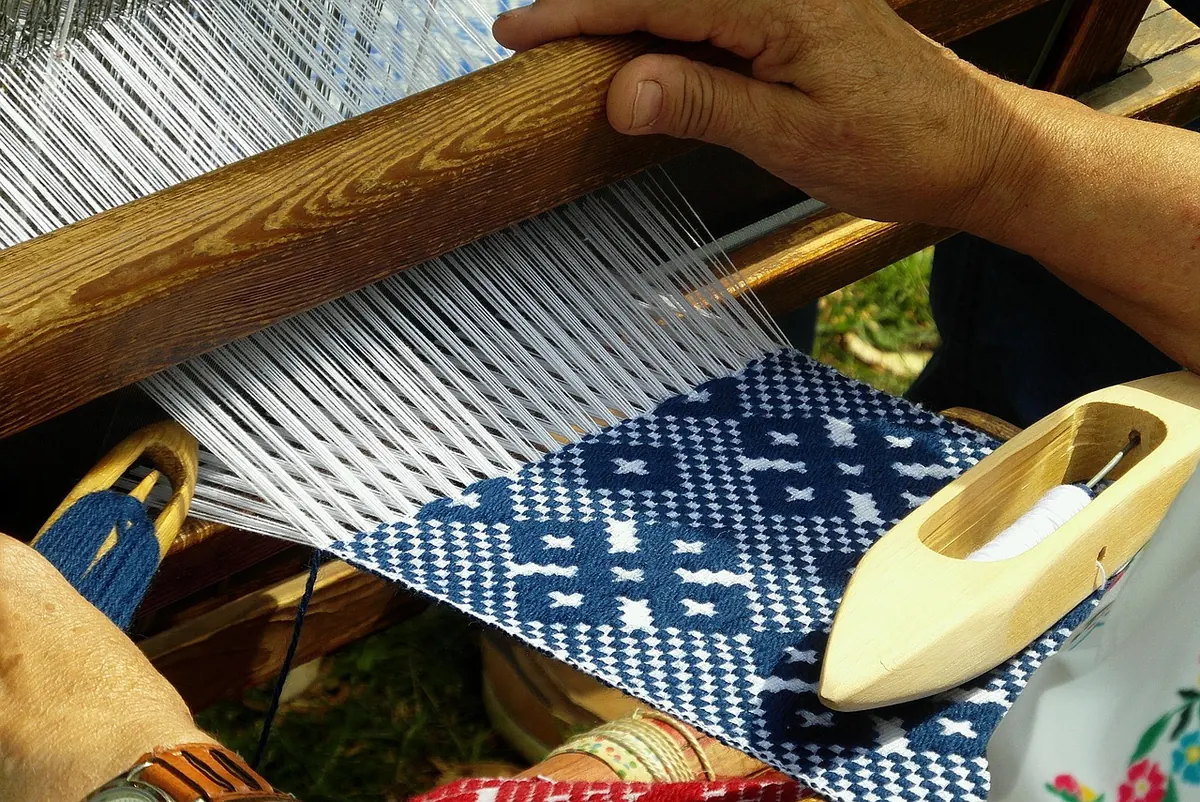
A wall hanging in a small apartment has to do two jobs at once: hold a wall without crowding it, and survive a room where the sofa, the radiator and the front door all sit within a few steps of each other. Most of the decisions that determine whether it works happen before anything goes up — in the measuring, the palette, and the hardware. Get those three right and a piece that looked enormous in the shop can settle into a room as though it had always been there.
Start with the wall, not the artwork
It is tempting to fall for a textile first and find a home for it afterwards. In a compact flat, do it the other way around. Measure the candidate wall properly: full width, floor-to-ceiling height, and the distance from any obstacle that interrupts it — a door frame, a radiator, a thermostat, a light switch that needs to stay reachable.
Then look at what sits beneath. A hanging above a sofa is read together with the sofa; the same piece on an empty stretch of hallway wall is read on its own. Note where daylight lands during the day and where lamps throw light in the evening, because a woven surface changes character completely between the two.
One habit worth borrowing from gallery installers: cut a paper or cardboard template to the exact size of the piece you are considering and tape it up for a day. You will learn more from living with a rectangle of brown paper than from any amount of imagining. Step back to the doorway you usually enter from — that is the view that matters most.
Proportion: sizing a piece for a compact room
In a small room you are almost always standing one to two metres from the wall. At that distance, texture reads loudly and fine detail barely registers at all, which is why a chunky, tactile hanging often works better than a delicate one with intricate pattern. Scale is the other half of that equation. A modest piece on a large wall looks like a stamp; a generous piece on the same wall can make the room feel taller rather than tighter.
These rules of thumb hold up in most apartments:
- Width above furniture: aim for roughly half to three-quarters of the width of the sofa, console or bed below it. Narrower and it floats; wider and it seems to press down.
- Bottom edge: leave 15–25 cm between the hanging and the top of the furniture, a little more if people lean back against it.
- Centre height: for a piece seen standing up, put the centre around 145–150 cm from the floor. Lower it slightly above a desk or dining bench, where people are seated.
- Groupings: keep 5–10 cm between pieces so they read as one composition, and align at least one edge.
In very small rooms, one confident piece per wall usually beats a cluster of small ones. If you do build a grouping, keep it tight and low — a scattered arrangement of six little textiles can make a narrow wall feel like a noticeboard.
Colour: value first, hue second
Squint at the room. What you see when the detail blurs is value — light, mid and dark — and that is what a textile needs to answer to. A piece that matches the tonal weight of the room sits quietly; one that fights it will be the only thing you notice from the doorway, whether you intended that or not.
Pull one colour from something already in the room: the rug, a cushion, the warm tone of a wooden chair, even the binding on a bookshelf. Echoing one note is enough. Matching everything turns a small room into a showroom.
For tight spaces, low-to-medium contrast generally reads as calm and makes walls feel further away, while a single dark, heavily textured piece against a pale wall gives the eye an anchor. A loose 60/30/10 split — dominant, secondary, accent — is a useful sanity check rather than a law. And check the colours at night with the lamps on: wool, linen and cotton all shift under warm bulbs, and a hanging that looks chalky in daylight can turn creamy after dark.
A wall hanging does not need to be large to hold a wall. It needs to be the right size for the distance you actually stand from it.
Hanging hardware: match the anchor to the wall
Textiles are heavier than they look, especially wool rugs, quilted pieces and anything mounted on a solid dowel. Weigh the piece on a bathroom scale before you buy a single hook, then add a margin. The hardware's job is to spread that load into the wall rather than concentrate it in two small points.
- Wooden dowel with two brackets or L-hooks: the simplest option for light and medium pieces, and the easiest to swap seasonally.
- French cleat: a pair of interlocking battens screwed into studs. Best for heavy rugs and quilts, because it distributes weight along the whole top edge and holds the piece flat.
- D-rings and sawtooth hangers: fine for small framed textiles and lightweight panels only.
- Toggle bolts: the reliable choice for hollow plasterboard, where ordinary plugs pull out under load.
- Sleeve anchors: for brick and concrete, which need a masonry bit and a gentler touch.
- Tension rod or ceiling track: a renter-friendly route in an alcove or across a recess, with no holes in the painted wall.
- Adhesive strips: acceptable for very light, flat pieces; not for anything with a dowel, and never directly above a bed or a seat.
Find the studs before you commit. Where there are none, use anchors rated comfortably above the weight of the piece. Old plaster, tile and anything you are unsure about are worth a conversation with a hardware supplier or an experienced installer — a fall from head height is not a small problem, and a heavy hanging above a bed or a favourite armchair is better moved to a side wall.
Details that keep a textile from feeling heavy
Keep the profile slim. A shallow shadow-box frame or no frame at all, a dowel rather than a bulky batten, and a small gap behind the piece so air can move — these details stop a hanging from dominating a compact room. Glass is usually worth skipping: it flattens texture and throws glare exactly where you do not want it.
Give the piece room to breathe. Thirty centimetres of clear wall on either side will do more for a small room than any styling trick. Keep textiles away from radiators, steamy bathrooms and long stretches of direct sun, which fades dye quietly over a season or two. Dust with a vacuum on low suction through a mesh screen, and rotate pieces between rooms once a year so no single surface takes all the light.
Before you drill: a twenty-minute check
Weigh the piece. Confirm your stud positions with a finder or a magnet. Check the anchor rating against the load. Tape the template up once more at the final height and look at it from the doorway, from the sofa, and from the kitchen. Then invite someone to hold the piece while you mark the holes — two pairs of hands save a great deal of filling and repainting.
Hang it, step back, and leave it alone for a week before adjusting. Placement in a small apartment is mostly about the space around a textile, not the textile itself. Once the piece has settled into the wall and the wall has stopped looking new, you will know whether it needs to move five centimetres — and it usually does.
Photo: Antranias / Pixabay